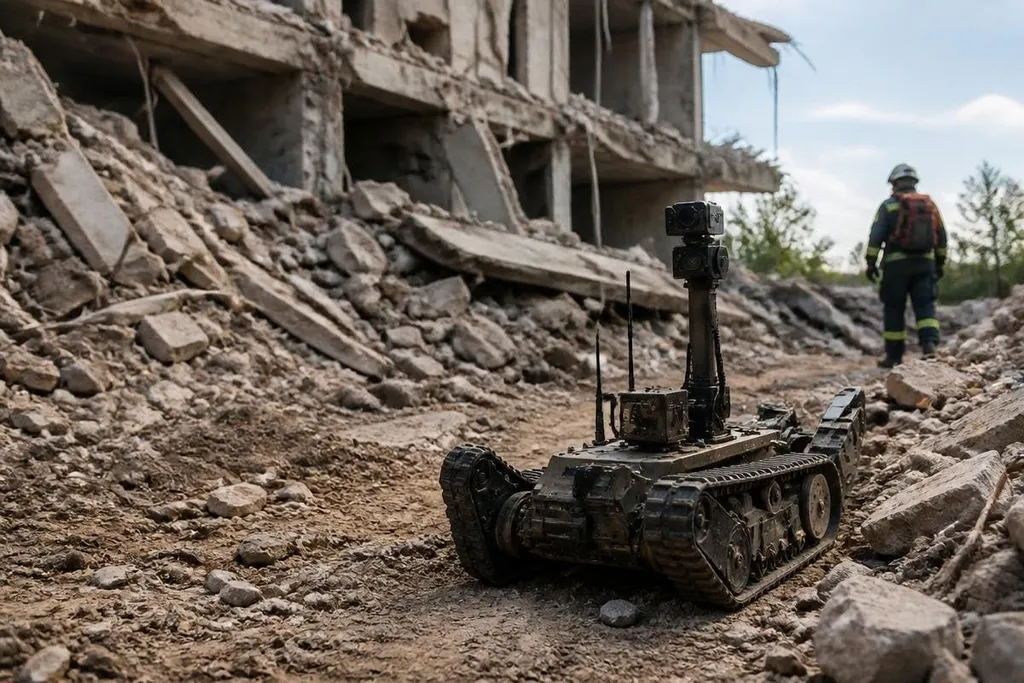
A rescue robot may reach a damaged building before a person can enter. The hard part comes after that first step: it must send clear information, keep working around dust and rubble, and let a trained operator control it from a safe place.
The future of rescue robots will depend on field tests that measure those jobs in detail. A machine that looks capable in a short demonstration still has to work when its camera is dirty, its radio link is weak, and the ground is uneven.
- Useful first role: send video, thermal images, and gas readings into unsafe areas.
- Main control issue: operators need a clear view of the robot’s position and surroundings.
- Proof still needed: teams must test failure recovery, battery changes, and damaged communications.
The first job is information
Rescue robots will likely start with tasks that keep people away from immediate danger. A tracked robot can carry a camera into a collapsed room, while a small drone can look over a damaged roof or blocked road. These systems do not need to move a person to help a rescue team make its next decision.
The useful data may include standard video, thermal images, distance readings, and gas measurements. Each tool answers a different question: can a person be seen, is heat coming from a body or a fire, can the robot pass through a gap, and is the air safe enough for entry?
That information only helps if the operator can trust its location and timing. A delayed video feed can make a moving robot hard to control, while a weak map can send the machine toward a blocked route.
Control remains a human problem
Most rescue robots will need teleoperation, which means a person sends commands while watching the robot’s sensors. Autonomy may help with small jobs such as holding a heading or stopping near an obstacle, but the operator still needs to understand what the robot sees.
This makes the control station part of the rescue system. A useful design should show the robot’s camera view, battery state, connection quality, and position without burying those details under extra screens.
Range figures need a test. A rescue team needs to know how a robot holds contact through rubble, smoke, and metal, and what the operator sees when the link weakens. Reports from Robot24.com can place those details beside the named machine and control setup.
The radio link is another weak point. Concrete, metal, smoke, and damaged buildings can block signals or reduce range.
A rescue team may need a relay robot, a cable, or a second operator position. The right answer will depend on the site, so tests must state the distance, building type, and communication method.
Moving through damage is harder than it looks
Rubble changes the job every few metres. A robot may need tracked wheels for loose material, a low body for narrow gaps, or an arm that can move light debris away from a camera. Each extra part adds weight, power use, and another way to fail.
Battery life also affects the rescue plan. A robot that runs for a short period may still help if its battery can be changed quickly and the team carries charged spares. A system with a longer runtime may be less useful if it takes specialised tools or a long shutdown to recharge.
Robots will also need safe failure modes. If a motor stops, the machine should report the fault and remain easy to find. If the signal drops, it should stop, return along a known route, or follow a rule the operator selected before entry.
What teams should test
The best buying decision will come from a test plan, not a video. Use this checklist before a rescue robot enters a service contract:
- Set the task: define the job, such as locating people or checking air quality.
- Record the site: test on rubble, stairs, smoke, darkness, or other conditions the team expects.
- Measure the link: log control distance, video delay, and what happens after signal loss.
- Check recovery: time a battery change, a rollover recovery, and a stuck-wheel response.
- Review the data: confirm that video, maps, thermal images, and sensor readings reach the operator.
- Train the crew: count the hours needed before a new operator can run the system safely.
These checks also show where a smaller machine may fit better than a large one. A drone could inspect a roof while a tracked robot checks a corridor, but the team must plan how their data reaches the same command post.
I'd wait for rescue robots to prove repeatable work in difficult sites before treating them as standard rescue equipment. The next useful question is simple: after a signal loss or damaged wheel, can the team recover the robot without sending a person into danger?