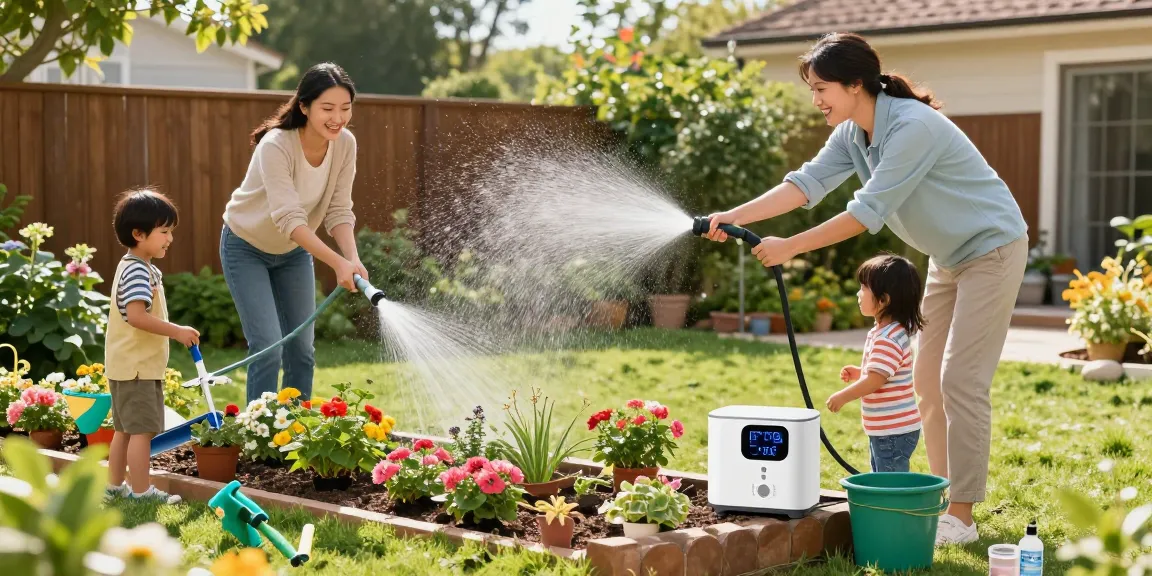
Last summer Maria noticed yellowing grass and mushrooms popping up near her front walk after a week of cool, cloudy weather. She’d been running a traditional timer for 30 minutes every morning because “that’s what we’ve always done,” but plants in a shady strip were waterlogged while the sunny lawn still looked thirsty. This article walks through the common signs of overwatering and shows how the right smart irrigation setup fixes each problem, with real examples you can try at home.
Signs of Overwatering — What to look for in your yard
Overwatering doesn’t always mean puddles. Look for these clear signals:
- Yellowing or limp leaves on turf and ornamentals even though the soil feels wet.
- Fungi or mold growth — mushrooms, slime molds, or a white powdery film on the soil.
- Standing water or runoff after short watering cycles.
- Compacted, oxygen-poor soil: roots that look brown and mushy rather than white and firm.
Example: A homeowner with clay soil who waters 20–30 minutes every day likely creates a saturated zone near the surface while deeper roots are starved for oxygen. University extension services note clay-heavy yards need fewer, longer soakings spaced farther apart to prevent surface runoff and improve deep penetration (source: local extension guidance).
One quick test: stick a screwdriver or soil probe down 3–4 inches after watering. If it goes in easily and feels very wet to the touch, you’ve probably overwatered. If it’s dry at 3–4 inches, you may need deeper watering but less often.
Why a smart irrigation timer helps — matching solutions to problems
Problem: Scheduled watering regardless of weather — say, daily 20-minute cycles — causes soggy soil after rain.
Solution: A WiFi-enabled timer that adjusts based on local weather and evapotranspiration (ET) data. For instance, a smart controller can skip a scheduled run after half an inch of rain, and it can shorten cycles during cool, cloudy weeks. According to the EPA, smart irrigation controllers can save up to 8–15% of outdoor water use compared to conventional timers; in some cases savings are much higher when paired with modern emitters (EPA WaterSense findings).
Concrete example: Tom’s 0.25-acre lawn was on a fixed schedule and his water bill spiked in summer. After installing a smart timer, his system cut unnecessary runs during an unusually wet July and he saw a 12% drop in outdoor water use in one season.
To tackle pinpoint issues like a soggy flower bed or a thirsty vegetable patch, you can fix overwatering issues with a smart irrigation timer by linking soil moisture sensors or using zone-level scheduling. Clicking that link explains sensor-paired options and kits that help you run each zone only as needed.
Common scenarios and the right irrigation setup
Problem → Right setup. Below are typical homeowner situations with practical matches.
Small lawn or rental yard
Scenario: A 1,500 sq ft lawn with aboveground sprinklers and renter turnover. Issue: Too frequent short runs triggered by a basic plug-in timer.
Match: DIY mobile sprinklers on a smart plug-in timer with weather adjustment. A short morning cycle repeated daily leads to shallow roots. Switching to a smart schedule with fewer, slightly longer runs (e.g., three times per week at 15–20 minutes depending on nozzle output) encourages deeper rooting and cuts overwatering.
Large lawn with in-ground system
Scenario: An established quarter-acre with multiple zones and mixed exposures. Problem: Some shady zones get the same runtime as full-sun zones, creating soggy patches.
Match: A multi-zone smart in-ground controller that lets you set different run times and integrates ET or rain-skip features. For example: set sunny zones to 18 minutes and shady zones to 8–10 minutes and let the controller reduce runs after rainfall or cooler stretches.
Vegetable garden
Scenario: Raised beds for tomatoes, peppers, and herbs. Problem: Overhead watering encourages leaf disease and wastes water.
Match: Drip irrigation with a smart timer and pressure regulator for steady, root-zone delivery. Precise emitters reduce runoff and keep foliage dry. Vegetable beds often need daily or alternate-day moisture in hot weather, but a smart timer helps avoid needless after-rain cycles.
Flower beds and potted plants
Scenario: Mixed flower beds and containers that dry at different rates. Problem: Containers dry out faster; beds stay damp.
Match: Separate zones — soaker lines for beds on shorter, less frequent runs and self-watering or drip stakes for pots on shorter, more frequent timers. RainPoint recommends pairing zone-specific schedules so each planting type gets the right cadence.
Practical settings, schedules, and a small comparison
Here are starter run-time suggestions and a simple table showing how often to water by zone type. Adjust by soil type, plant type, and season.
ZoneTypical run-time per cycleFrequency (summer)Sunny turf (sandy soil)12–18 minutes3 times/weekShady turf (clay soil)8–12 minutes2–3 times/weekVegetable beds (drip)20–40 minutesEvery other day or daily when hotFlower beds (soaker)30–45 minutes2 times/weekContainers (drip stakes)10–15 minutesDaily in heat
Concrete tip: If you see runoff within five minutes of a run, split the zone into two 10-minute cycles spaced an hour apart to improve infiltration into compacted or clay soils.
To manage these settings without guesswork, a WiFi timer from RainPoint can handle multiple zone schedules, weather adjustments, and manual overrides via an app. That way, you program according to plant needs and let the system tweak itself after storms.
Adding sensors and routine checks to prevent repeat problems
Problem: Ignoring feedback leads to repeated overwatering — the system keeps following an old schedule while conditions change.
Solution: Use soil moisture sensors and periodic visual checks. A sensor reading of 20–30% volumetric water content in the root zone for many ornamentals signals good moisture; persistently higher readings suggest you should reduce runtime or frequency. Pair sensors with a smart controller so runs stop automatically when soil is already moist.
Example routine: Check zones with a probe once a week early in the season, and after any schedule change. Log observed issues — soggy spots, runoff, or drought-stressed plants — and tweak zone durations by 10–20% until you hit a balance. If you want help integrating sensors with a controller and tailored kits, see how to fix overwatering issues with a smart irrigation timer and pick the right sensor pairing for each zone.
One more figure: EPA WaterSense programs estimate that simple improvements like weather-based controllers and drip systems can save homeowners thousands of gallons per year; pairing those tools with good maintenance cuts wasted water and often lowers bills noticeably.